
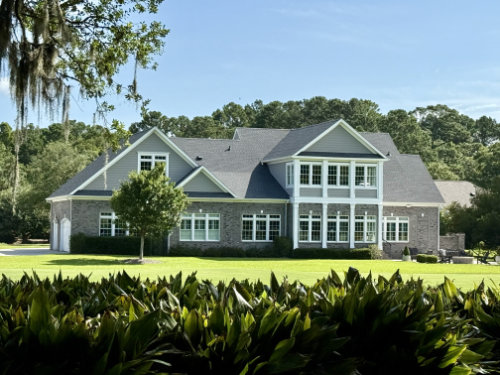
Mountain air may be crisp, but along the Carolina coast, your roof fights an invisible enemy every day — salt.From Carolina Shores to Shallotte, the blend of salt, humidity, and coastal wind gradually corrodes roofing metals, breaks down protective coatings, and encourages algae growth. At Providence Roofing, we’ve seen first-hand how coastal conditions quietly shorten a roof’s lifespan when materials aren’t chosen and maintained with chemistry in mind.
This guide breaks down the science of salt-air roofing defense — from corrosion-safe fasteners and algae-resistant shingles to humidity-control ventilation. We’ll also share a real-world example from a Lake Norman property owner who learned how “low-touch” doesn’t have to mean “high-risk.”
Whether you’re a full-time coastal resident or manage a rental near the water, here’s how to keep salt, sun, and moisture from eating your roof alive.
Salt air isn’t just water vapor — it’s a microscopic mist of sodium chloride particles carried by the wind. These particles:
Even if you live miles inland, prevailing winds can still carry salt mist into your community. Roofs near marshes, lakes, or the Intracoastal Waterway often show similar corrosion patterns — rusted fasteners, oxidized flashing, and algae streaks.
The solution isn’t simply “clean more often” — it’s about using materials designed to resist salt at a molecular level.
Every roofing material reacts differently to salt exposure. Based on 20+ years of experience across both mountain and coastal Carolina climates, here’s what we’ve found performs best:
| Material | Pros | Notes |
|---|---|---|
| Standing Seam Aluminum Roofing | Corrosion-proof, lightweight, energy efficient | Use marine-grade (5000-series) aluminum; resists pitting and oxidation |
| Stone-Coated Steel Roofing | Textured finish hides salt staining, long lifespan | Choose panels with a strong acrylic topcoat; confirm warranty covers coastal use |
| Architectural Asphalt Shingles with Copper or Zinc Granules | Algae-resistant, affordable, strong wind ratings | Look for shingles labeled “AR” (algae-resistant) or with Scotchgard™ protection |
| Synthetic Slate or Shake | UV-resistant, minimal water absorption | Excellent choice for vacation or rental properties needing low maintenance |
A roof is only as strong as the fasteners holding it down. Coastal corrosion often starts at these small but critical points.
At Providence Roofing, we routinely replace rusted nail strips or flashing in as little as five years on coastal homes that used lower-grade metals. Upgrading to stainless or marine-grade materials often adds 10–15 years of service life — a major return on investment.
Humidity and shade are perfect breeding grounds for blue-green algae (Gloeocapsa magma), the black streaking you see on many roofs. While not always structurally harmful, algae retain moisture and shorten shingle life.
Combine:
Apply gently with a pump sprayer and rinse with garden-hose pressure. Always wear eye protection and never mix bleach with ammonia.
When in doubt, call a professional — improper cleaning can void your manufacturer’s warranty.
Even the best materials fail prematurely if the roof system can’t breathe. High humidity inside your attic can condense under the roof deck, causing rust from the inside out.
We’ve seen metal roofs rot out from the inside due to trapped humidity. Balanced ventilation can extend roof life by 30% or more, especially in salt-laden, humid environments like the Carolina coast.
If you own a vacation or rental property near the water, you need a low-maintenance plan that protects your investment even when you’re not there.
We can also coordinate directly with property managers or tenants to handle scheduling — no need to be on-site.
One of our Lake Norman clients manages several short-term rentals with metal and asphalt roofs. Salt-laden lake air and humid summers were corroding vent flashings and causing algae streaking on shaded roof slopes. Providence Roofing implemented:
Result: zero corrosion in three years and a clean, curb-appeal-ready roof for incoming renters — all managed remotely.
Even handy homeowners should leave certain tasks to licensed roofing professionals:
Providence Roofing’s team is fully insured, veteran-owned, and safety-certified. Every technician follows industry standards for ladder use, fall protection, and chemical handling.
Material & Design:
☑ Marine-grade aluminum or stainless fasteners
☑ Algae-resistant shingles with copper granules
☑ Non-reactive flashings (no mixed metals)
Maintenance:
☑ Rinse roof annually with clean water
☑ Inspect flashing and fasteners for rust
☑ Clean gutters and valleys regularly
☑ Treat algae early with safe, low-pressure wash
Ventilation:
☑ Check attic vents for clear airflow
☑ Add ridge or gable fans if humidity persists
☑ Verify insulation and vapor barriers are intact
Absentee Owners:
☑ Schedule remote inspection service
☑ Request photo reports for peace of mind
☑ Keep a service record for insurance and warranty claims
Salt and humidity will always be part of coastal living — but roof damage doesn’t have to be. By choosing the right materials, fasteners, and algae-resistant technologies, you can extend your roof’s lifespan and preserve your property value for decades.
At Providence Roofing, we’ve spent more than 20 years helping homeowners across North and South Carolina stay ahead of the elements. Whether you live in your home year-round or manage a rental from afar, we’ll tailor a maintenance plan to keep your roof strong, clean, and worry-free.
Contact Providence Roofing today to schedule your coastal roof inspection or salt-air maintenance plan.
📞 (704) 883-6052
🌐 https://providenceroofs.aboveall.dev
Because with the right chemistry — and the right roofer — your roof can beat the coast at its own game.