
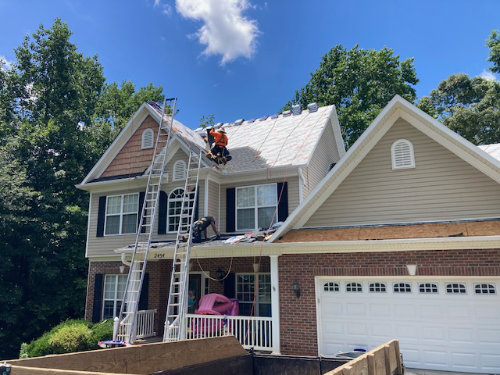
Living in the scenic beauty of Burnsville, Spruce Pine, and Eastern Buncombe County comes with many rewards—fresh mountain air, stunning views, and peaceful wooded surroundings. However, the same trees that make your property picturesque can also create unique challenges for your roof. Dense tree cover, heavy leaf fall, and year-round shade can lead to costly roofing problems if not managed properly.
Here’s what every homeowner in these wooded environments should know about how trees affect their roof—and how to protect your home for years to come.
Trees close to your home often have branches that extend directly over the roof. During high winds or storms, these branches can scrape shingles, break off, and cause serious damage. Even smaller twigs can create tiny abrasions that weaken shingles over time.
Prevention Tip: Schedule regular tree trimming to keep branches at least 6–10 feet away from the roofline. This not only reduces direct impact damage but also minimizes debris buildup.
Wooded areas mean a constant supply of leaves, pine needles, and small branches falling onto your roof. If left unchecked, this debris can trap moisture against the shingles, leading to mold, mildew, and rot. Clogged gutters are another big concern—when water can’t flow away from your roof, it can back up under shingles or pool near the foundation.
Prevention Tip: Clean your roof and gutters at least twice a year—once in late fall after leaves drop, and once in spring to clear winter debris. Consider installing gutter guards for extra protection.
Shaded roofs in humid, wooded environments are the perfect breeding ground for moss and algae. Moss holds moisture against your shingles, which can weaken them and cause premature aging. Algae leaves dark streaks that not only look unattractive but also signal that the roof surface is being compromised.
Prevention Tip: Use a roofing material with algae-resistant shingles or have a professional apply a moss prevention treatment. Never try to scrape moss off yourself—it can damage shingles. Instead, hire a roofing expert for safe, effective cleaning.
Because wooded areas often block sunlight, roofs may stay damp longer after rain or snow. In winter, this extra shade can also increase the risk of ice dams—thick ridges of ice that form at the roof’s edge and prevent melting snow from draining properly. Ice dams can cause water to seep into your attic and damage insulation, ceilings, and walls.
Prevention Tip: Ensure your attic is well-insulated and ventilated to maintain an even roof temperature. This helps snow melt evenly and reduces the likelihood of ice dams forming.
Trees close to your home can give squirrels, raccoons, and other wildlife easy access to your roof. These animals can chew through shingles, fascia boards, and vents, leading to expensive repairs.
Prevention Tip: Keep branches trimmed back and inspect your roof for signs of animal activity, such as gnaw marks or nests. A professional inspection can help identify weak points before wildlife moves in.
While DIY maintenance is helpful, the unique challenges of wooded environments require an experienced roofing professional to catch problems early. Annual inspections can identify damaged shingles, clogged ventilation, hidden leaks, or subtle signs of decay that you might overlook.
By staying proactive, you can extend your roof’s life, prevent costly repairs, and keep your home safe from the elements—without sacrificing the beauty of your wooded property.
The Bottom Line:
Trees add charm and natural beauty to your home, but without proper care, they can be your roof’s biggest enemy. With regular trimming, seasonal cleaning, and professional inspections, you can enjoy the best of both worlds—picturesque views and a well-protected home.
For expert roof maintenance, inspections, and repairs in Burnsville, Spruce Pine, and Eastern Buncombe County, contact Providence Roofing
today. We understand the unique roofing needs of mountain and wooded environments and are committed to keeping your home safe year-round.
📞 704.883.6052
🌐 Providence Roofing