
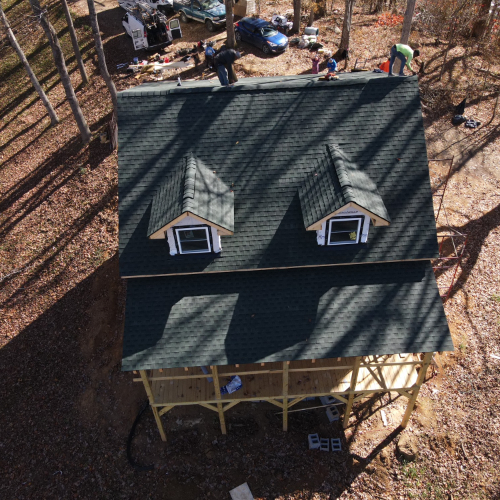
June in the North Carolina mountains brings lush greenery, blooming wildflowers—and a full range of unpredictable weather that can wreak havoc on your roof. Homeowners in Spruce Pine, Burnsville, Marion, and Lenoir know that summer doesn’t always mean sunny skies. From heavy rainstorms to dramatic temperature swings between day and night, June’s conditions demand extra attention to roof maintenance and performance.
Mountain homes face unique environmental challenges due to elevation, humidity, and thick tree cover. Let’s look at how June weather impacts your roof and what steps you can take to keep your home protected throughout the summer season.
Mountain storms in June can be intense, often dumping inches of rain in a short span. When your roof doesn’t have proper drainage, this water can pool, seep into vulnerable areas, and cause significant damage.
Tips for managing drainage:
Don’t wait until you see water spots on your ceiling. Preventative action now can save thousands in water damage repairs later.
June mountain weather brings mild, breezy mornings and hot, humid afternoons. These constant temperature shifts cause your roofing materials—especially asphalt shingles and metal components—to expand and contract daily.
Why this matters:
The best way to combat thermal damage is with a professional roof inspection that checks for early signs of wear. Replacing a few shingles now is much cheaper than replacing a roof section after a leak.
With frequent rain and dense tree cover, mountain homes are particularly prone to moss, algae, and lichen growth on shaded sections of the roof. These organisms may seem harmless at first but can degrade shingles and retain moisture, creating a cycle of decay.
Prevent moss buildup with:
If your roof is already showing signs of green patches or black streaks, it’s time for a roof cleaning and inspection.
The earlier you find a leak, the less damage it causes. Many roof leaks begin as tiny cracks or loose flashing, made worse by heavy rain and temperature stress. Unfortunately, these early-stage leaks often go unnoticed until water reaches the attic or ceiling.
Warning signs of a leak:
Have your roof checked at least once a year by a professional roofer familiar with mountain climates. Regular inspections can catch minor problems before they escalate into major repairs.
June is a beautiful time in the North Carolina mountains, but it’s also a season that tests your roof’s durability. By staying proactive with drainage, addressing temperature-related wear, controlling moss growth, and detecting leaks early, you’ll ensure your home stays protected through the summer and beyond.
Whether you live in Spruce Pine, Burnsville, Marion, or Lenoir, mountain weather doesn’t have to catch you off guard. Trust your roof to professionals who understand the terrain and climate.
Contact us at Providence Roofing at our mountain location:
👉 Providence Roofing contact Boone