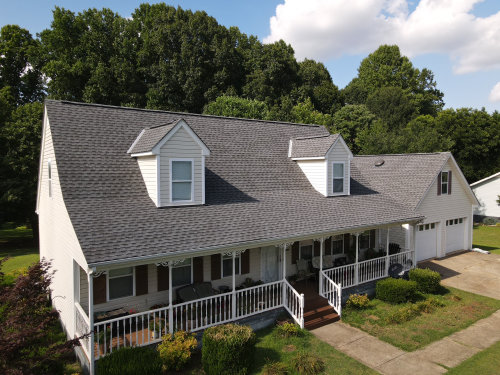
Understanding the Hickory, NC Climate: What a Roof Must Withstand
Before diving into materials, it helps to understand the the local climate stresses your roof must resist. Hickory experiences:
Hot, humid summers that can promote moisture, algae, and thermal stress
Occasional severe thunderstorms, with wind, hail, and heavy rainfall
Mild winters with occasional freeze/thaw cycles
Moderate temperature swings that aggravate expansion/contraction stress
These combined stresses accelerate aging, especially for lower-grade roofing systems.
Therefore, your ideal roof material should offer good resistance to UV, moisture, wind, and thermal movement, with enough longevity to justify cost over time.
Key Criteria for Comparing Roofing Materials
When comparing roofing options, here are the most important metrics homeowners in Hickory should weigh:
Durability / Expected Lifespan — How long the roof can last under local conditions
Upfront and Lifecycle Cost — Material + installation + maintenance + replacement
Energy Efficiency / Thermal Performance — How well the roof helps reduce heating/cooling costs
Maintenance, Repairability & Aesthetics — How much upkeep is needed, ease of repair, architectural compatibility
Standard three-tab asphalt shingles often last ~15–20 years in the Hickory / Statesville climate.
Architectural (dimensional) shingles typically last 25–30 years, assuming good installation and ventilation.
Premium / impact-resistant variants may reach 30–40 years under ideal conditions.
Cost
Among the lowest cost per square foot (material + labor) for residential roofing
Replacement or repair costs are relatively low
However, over a 25–30 year span, multiple replacements may erode cost advantage
Energy Efficiency
Traditional asphalt shingles are not highly reflective; dark colors absorb heat
But newer “cool roof” or energy-efficient asphalt shingles incorporate solar-reflective granules to reduce heat gain. (gaf.com)
Good attic insulation and ventilation are especially important to offset heat buildup under shingles.
Maintenance & Other Considerations
Prone to algae, moss, and discoloration in Hickory’s humid climate, particularly in shaded areas
Requires periodic inspection, cleaning, and shingle replacement
Lightweight and easy to install or repair; works well with most roof slopes
Suitability Summary Asphalt shingles remain one of the most practical roofing options in Hickory due to low upfront cost and familiarity. The tradeoff is a shorter lifespan, sensitivity to algae in humid conditions, and less energy performance unless you choose upgraded “cool” models.
2. Metal Roofing (Standing Seam, Metal Shingles / Panels, Stone-Coated Steel)
Durability / Lifespan
Metal roofs can last 40–70 years or more, with many systems offering 50-year warranties.
Resistant to wind, hail, fire, and UV degradation
Minimal degradation of reflective properties over time compared to asphalt. (Wikipedia)
Cost
Higher upfront cost compared to asphalt — materials and installation both cost more
However, lower maintenance and longer life often yield better lifecycle cost
Some specialty metal options (e.g. copper) are more expensive but offer additional aesthetic or longevity benefits
Energy Efficiency
Metal is highly reflective, reducing heat absorption and helping cool the home in summer. (gaf.com)
With proper coatings, finishes, and ventilated underlayments, metal roofs can reduce cooling loads significantly (sometimes up to ~40%) (decra.com)
Because metal loses less reflectivity over time, the energy benefit persists longer than for asphalt
Maintenance & Other Considerations
Very low maintenance—inspections of fasteners/seals periodically
Noise (rain sound) is often cited, but proper insulation/underlayment mitigates this
Weight is low relative to tile/slate; structural modifications usually not required
Installation requires skilled labor, particularly for flashing and seams
Suitability Summary Metal roofing offers one of the best long-term, high-performance choices for Hickory homes. The upfront cost is higher, but the combined durability, energy savings, and low maintenance make it compelling, especially for homeowners planning long-term.
3. Slate, Clay & Concrete Tile
Durability / Lifespan
Slate roofs can last well over 100 years when properly installed.
Clay and concrete tiles are also extremely durable—50 to 100+ years in many cases.
These materials resist UV, fire, and insect damage well
Cost
High material cost and higher installation cost
Also heavy: roof structure must support the extra load, adding to cost
Repair and replacement of individual tiles is feasible, but skilled labor is needed
Energy Efficiency
Tiles have good thermal mass, which helps buffer temperature swings
Tile surfaces reflect sunlight well, especially light-colored tiles
Combined with air spaces beneath tiles, they can help reduce heat transfer into the house
Maintenance & Other Considerations
Fragile under impact (hail, falling branches) — may crack or break
Heavy weight means structural reinforcement is often necessary
Not suitable for low-slope roofs
Tile roofs have aesthetic appeal and can boost resale value significantly
Suitability Summary Tiles (clay, concrete, slate) are premium options that deliver beauty and longevity. For many Hickory homes, the high cost and structural requirements may be prohibitive unless you’re building or substantially remodeling and have the budget to match.
Composite materials often come with 40–50+ year warranties
They are engineered to resist UV, moisture, impact, and freeze-thaw cycles
Because they are synthetic, they avoid many of the natural material weaknesses (e.g. rot)
Cost
More expensive than standard asphalt, but less than natural slate/tiles
Installation is similar or slightly more complex than asphalt, depending on product
Energy Efficiency
Many composites are designed with reflective coatings or light-tone color ranges
Combined with proper insulation, they can perform very nearly as well as metal or tile in moderate climates
Maintenance & Other Considerations
Lightweight, easy to install
Repairs tend to be simple (replace a panel or section)
Aesthetically, they mimic high-end materials without the weight or cost
Suitability Summary Composite roofing offers a balance between performance and cost. It’s very well suited for Hickory homes that want the look of slate or shake but don’t want the structural or financial burdens of the real materials.
5. Specialty / Alternative Options: Copper, Green Roofs, “Cool Roof” Membranes
Copper can excel in durability and architecture. It forms a protective patina over time and can last centuries if properly maintained. (Wikipedia)
However, it’s expensive and usually only used on accents, standing seams, or specialty areas rather than full residential roofs.
Green / Living Roofs (vegetated roofs) are less common in residential roofing in Hickory due to structural and drainage demands, but they do provide excellent insulation, stormwater benefits, and longevity of the underlying membrane. (Wikipedia)
Cool / Reflective Roof Membranes (especially for low-slope roofs) such as TPO, PVC, or coated systems offer superior reflectivity and energy benefits in sun-exposed areas. (The Department of Energy's Energy.gov)
These options tend to be niche in single-family homes, but may suit certain architectural or sustainability goals.
Comparative Summary Table
Material
Typical Lifespan*
Relative Upfront Cost
Energy / Reflectivity Performance
Maintenance Needs
Suitability for Hickory
Asphalt (standard)
15–20 years
Low
Moderate (improved with cool shingles)
Moderate (algae, shingle wear)
Good budget option, expect earlier replacement
Asphalt (architectural / premium)
25–30+ years
Moderate
Better with reflective variants
Moderate
More durable choice with manageable cost
Metal (standing seam, coated)
40–70+ years
High
Excellent (reflective)
Low
Very strong long-term choice
Stone-coated / metal shingles
50+ years
High
Very good
Low
Good for moderate aesthetic + performance balance
Composite / synthetic slate / shake
40–50+ years
Moderate–High
Good (especially lighter colors)
Low
Balanced option mimicking premium materials
Slate / Clay / Concrete Tile
50–100+ years
Very High
Very good (with thermal mass)
Low to moderate
Best for homes designed for it; heavy cost
Copper / Specialty
100+ years (often “lifetime”)
Very High
Excellent (reflective, conductive)
Low
For accent or unique architectural features
Cool Roof Membranes / Green Roofs
20–50+ (depending on system)
Variable
Very high (especially reflective systems)
Moderate (vegetation maintenance or coating upkeep)
There’s no one-size-fits-all, but here are recommended directions based on priorities:
Best long-term value & durability → Metal roofing (or stone-coated metal) often offers the best tradeoff of long life, low maintenance, and energy savings, especially in Hickory’s climate.
Best hybrid / mid-tier premium → High-end composite roofing gives a near-premium look with reduced weight and cost.
Best for tight budgets → Dimensional asphalt shingles with cool-roof granules are workable, but expect more frequent replacement.
Best for architectural style / statement → Slate, clay, or tile roofs are ideal if your budget and structure allow it.
In all cases, ensure you partner with a qualified roofer who understands local climate challenges (wind, hail, humidity) and follows best practices for flashing, venting, underlayment, and installation.
Tips to Maximize Roof Performance in Hickory
Ventilation & insulation: Good airflow through the attic and proper insulation are essential to reduce heat and moisture buildup.
Use algae / mold-resistant materials: Especially for asphalt roofs, choose products with copper or zinc granules to inhibit growth.
Choose lighter or reflective colors: Even with good materials, color affects performance. Lighter tones reduce heat gain.
Inspect after storms: Hickory gets thunderstorms; check for loose, lifted, or damaged shingles or panels.
Clean gutters and debris: Prevent water backup, rotting fascia, or underlayment leaks.
Routine inspections: Even durable roofs benefit from periodic checks around flashings, valleys, fasteners, etc.
Working with a Local Contractor: Providence Roofing (Hickory, NC)
If you're planning a roofing project around Hickory, NC, you may consider working with Providence Roofing. They have a local presence and familiarity with regional weather challenges, codes, and best practices.
You can reach their Hickory office or contact them via their contact page here:
They can help you with roof inspections, material selection, estimates, and installation tailored to Hickory’s climate and building practices.
Final Thoughts & Recommendations
For most Hickory homeowners seeking balance, metal roofing or stone-coated metal is an excellent long-term choice.
If your budget is constrained, high-performance architectural asphalt shingles are a solid fallback, especially when combined with good underlayments and ventilation.
Reserve premium options like slate, tile, or copper for homes where the aesthetic and structure justify the higher cost.
Providence Roofing is your trusted, Veteran Owned and Led, local roofing contractor. Our business was formed out of a desire to build long-lasting, beautiful roofs for residential and commercial customers.