
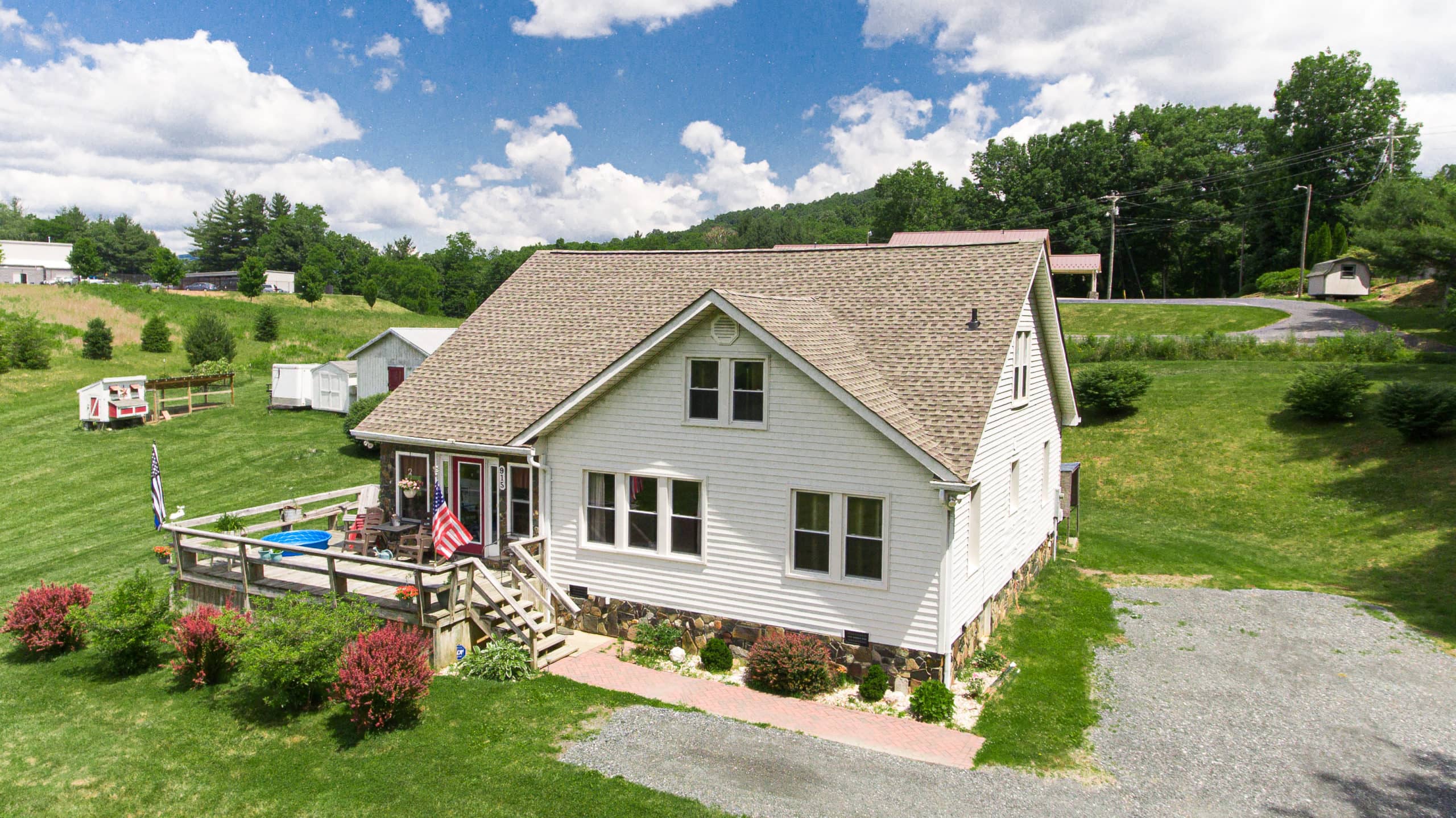
So, the time has come to replace or install your roof. Which material do I choose? As a typical accountant would say, “It depends.” Asphalt shingles have long been known for their reliability, cost-effectiveness, and ease of maintenance, making them the most popular roofing material on the market. Coming in second place are Metal roofs thanks to their durability, longevity, and the variety of styles available.
Though both materials are great options for residential roofing, one may be better suited to your needs. So, let’s look at each to hopefully help you make the right decision for your roof. We stacked them up against each other—metal roofs vs. asphalt shingles—comparing everything from aesthetics to eco-friendliness to help you make the right decision for your roof.
Both materials have finish options for every housing style.
While shingle roofs have a traditional look of their own, nowadays they’re being manufactured to mimic the look of slate, wood shakes, and tile. You can find almost any style to match your favorite style of home. The color options are wide-ranging from slightly weathered (to complement older homes) to subtly multicolored.
Traditionally, metal roofs were made of corrugated tin panels (called multi-rib or Agricultural panels) that evoke images of barns or sheds. But metal roofing—in zinc, aluminum, galvanized metals and even copper in addition to tin—has come a long way from the farm. You’ll see metal roofing that suits less rustic, more refined structures, from California contemporaries to East Coast Victorians, in a spectrum of colors and finishes, and in shingle, slate, and shake styles.
Because you can likely get the look you want from either metal or asphalt shingles, don’t let appearance be the deciding factor; instead, choose the material that will perform best for you.
Metal roofs tend to be more durable.
Metal roofs can stand up to nearly any type of weather, so you’ll find that they come with 30- to 50-year warranties, and often outlast that with lifespans of 40 to 70 years. Metal roofs do however have weaknesses: Extreme hail or falling branches could dent a metal roof, as could walking on it improperly.
Shingles have a shorter lifespan due to their own unique set of weaknesses. Pooling water and chronically damp conditions can lead to algae and fungus growth, ice dams can create cracks, and temperature spikes between day and night can reduce the life of your shingle roof. Shingle roofs come with 15- to 30-year warranties, depending largely on the region, environment, and climate.
Shingle roofs are cheaper up front.
Though you’ll get more life out of a metal roof, you’ll pay the price at the time of installation. Metal roofs generally can run from 150% to 400% more than asphalt shingles. Its installation will also run you more for metal since it’s a more specialized job.
You may recoup some of the costs of a metal roof down the road because you likely won’t ever have to replace it. Additionally, insurance companies may offer discounts to homes with metal roofs. You may even qualify for tax credits by installing a metal roof on your primary home.
Metal roofs are more eco-friendly.
Because they’re largely made of recycled material and can be recycled again and again, metal roofs are considered a more sustainable choice than asphalt shingles. Metal roofs are also more energy-efficient thanks to their reflective qualities, which can block heat transmission to the home’s interior. Specialized paint coatings can further reduce your cooling bills. Asphalt shingles, on the other hand, need to be replaced more frequently than metal roofs. Also, asphalt shingles are a petroleum-based product, which increases dependency on fossil fuels.
Asphalt shingle roofs generally are easier to install and repair.
For pros, the work requires little specialized knowledge and basic tools. Shingles can be installed in a day or two in some cases. Metal roofing installation typically requires a more skilled and specialized tradesman. The job is more precise, with less room for error, so it won’t move as quickly as a shingle installation. However, some lightweight metal products may be able to be installed right over an existing roof in good condition, simplifying installation overall and eliminating the cost of ripping the original roof out.